The high-temperature rotary kilns used in cement manufacturing allow certain waste and resource-derived products to be converted into alternative raw materials and fuels. This reduces the use of natural resources and fuels and supports resource circulation. Asia Cement manages the associated product-quality, operational-safety and environmental risks when using alternative materials.
A Model of Circular Economy
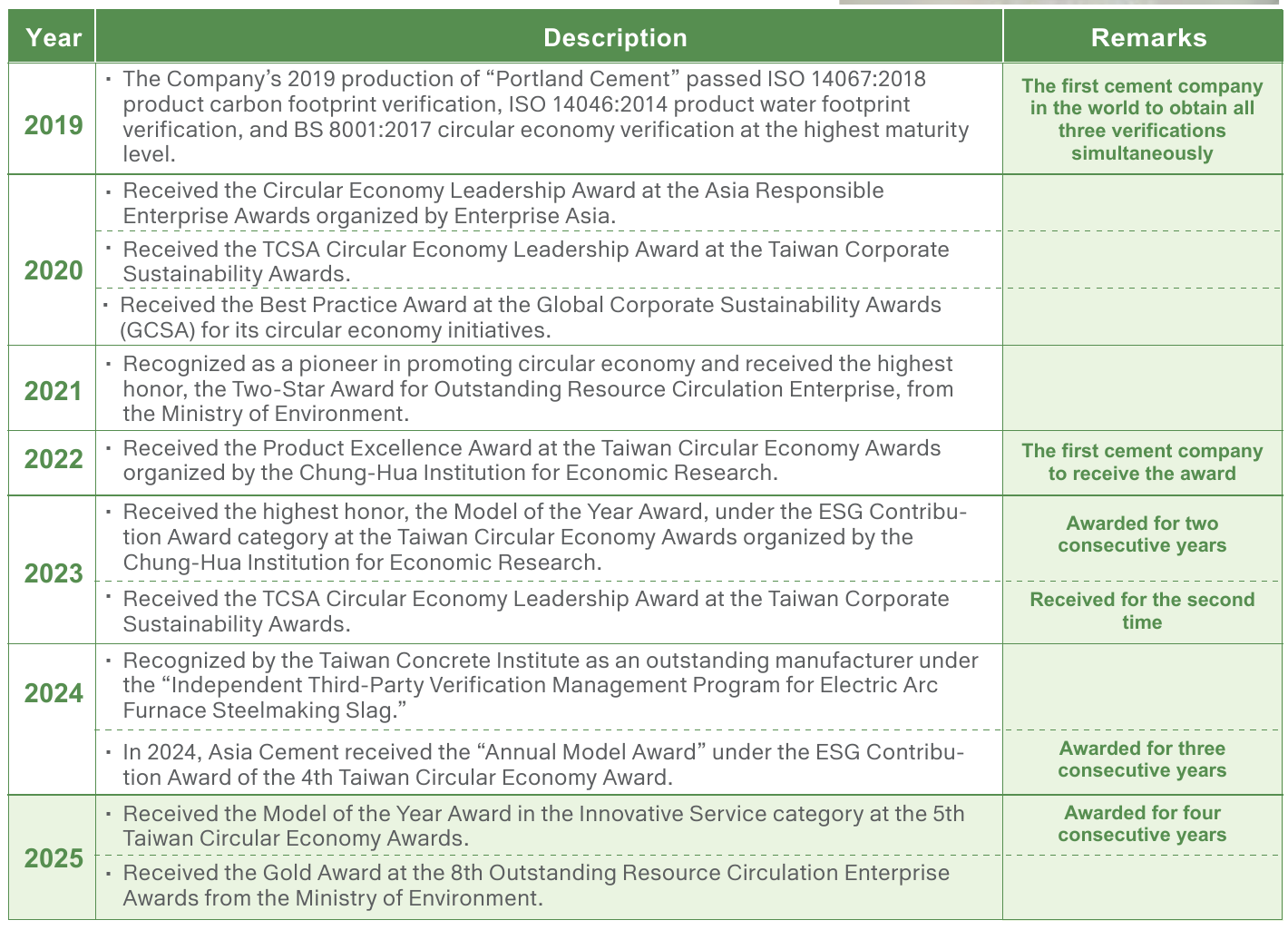
Asia Cement supports Sustainable Development Goal 12 by promoting efficient resource use and reducing waste through prevention, reduction, recycling and reuse. It also shares its resource-circulation experience and works with industry partners to expand appropriate waste-treatment and resource-recovery capacity.
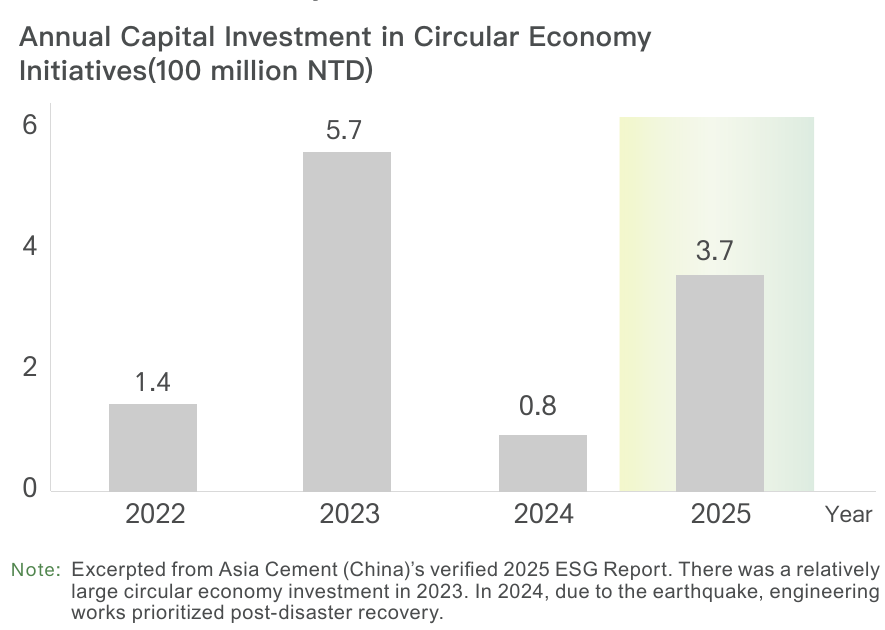
Investment of circular economy crtitical resources
Asia Cement continues to invest in facilities and systems for alternative raw materials and fuels, product quality control and emissions monitoring. The 2025 sustainability report presents circular-economy capital investment of NT$370 million. The accompanying chart is excerpted from Asia Cement (China)'s verified 2025 ESG report.
Sustainable Resource Cycling and Co-processing in Cement Manufacturing
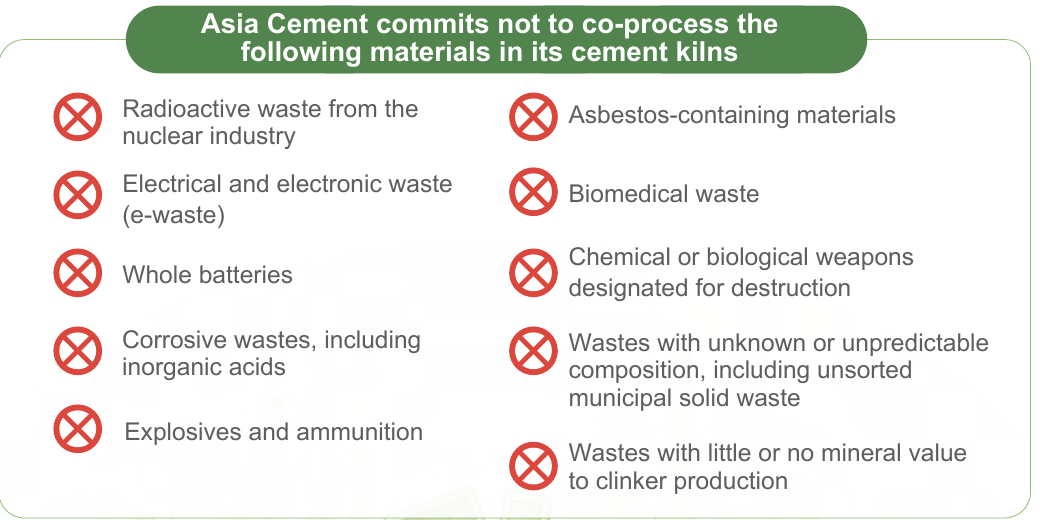
Asia Cement co-processes eligible waste and resource-derived materials in accordance with applicable Taiwanese regulations, reuse permits and the Global Cement and Concrete Association (GCCA) guidelines. Before introducing alternative materials, the Company assesses potential effects on environmental protection, transportation safety, occupational health, operations and product quality. It excludes waste types that could pose unacceptable safety, operational or environmental risks.
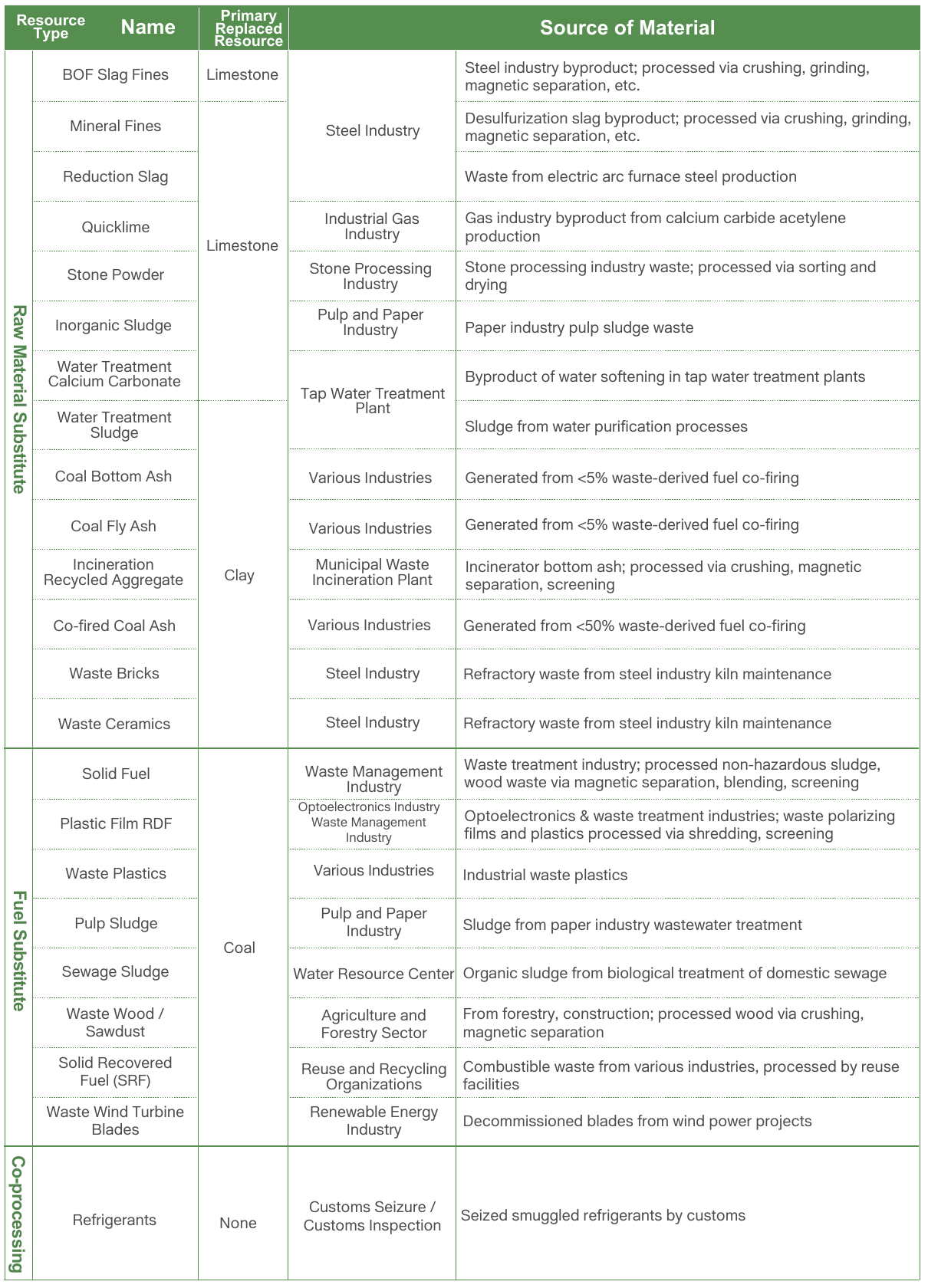
In 2025, Asia Cement used 644,122 metric tons of alternative raw materials across its Hsinchu and Hualien plants. Alternative fuel use at the Hualien Plant rotary kiln totaled 59,025 metric tons. The types and sources of materials are shown below.